
Analysis of the Islamic Boarding School Law, Professor of UIN Jakarta: PDF Has the Right to Recognition and Support Equal to Formal Education
Jakarta — Formal Early Education (PDF) as one of the Islamic boarding school education units has a strategic position in the National Education System. In addition to playing a role in producing a generation that is tafaqquh fiddin, PDF also contributes to increasing access and participation in national education so that it is entitled to state recognition, protection, and support like other formal education units.
This emerged in the Discussion on the Pesantren Law held by the Islamic Boarding School Community Network (JMP) online, Thursday (23/7/2026). With the theme "Dissecting Formal Early Education Units (PDF): Recognizing and Placing the Position of Islamic Boarding School Education in the Context of the National Education System", the activity was attended by hundreds of participants from elements of the Ministry of Religion, academics, pesantren managers, community organizations, and Islamic education observers.
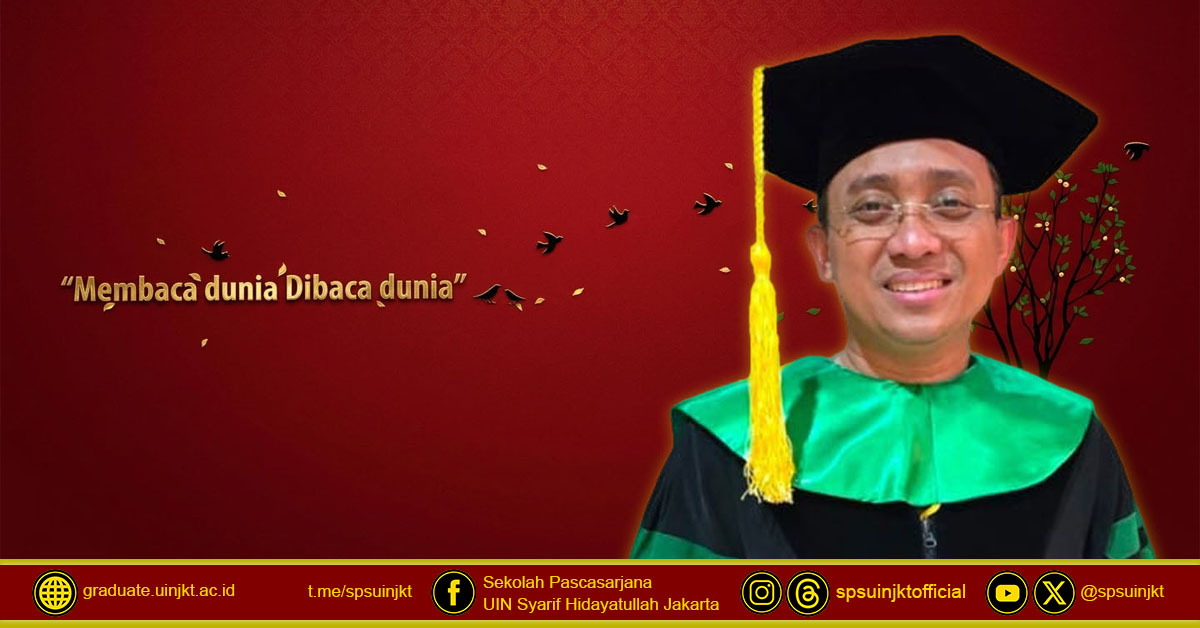
Professor of Islamic Education Thought at UIN Syarif Hidayatullah Jakarta, Prof. Dr. Suwendi, M.Ag., emphasized that the birth of Law Number 18 of 2019 concerning Islamic Boarding Schools is a form of state recognition of Islamic boarding schools as educational institutions that grow from the traditions and culture of the Indonesian nation.
"The Islamic Boarding School Law is a necessity in the context of how the state recognizes and facilitates educational institutions with Indonesian characteristics proportionately," said Suwendi, who is also the initiator of the Islamic Boarding School Community Network.
According to him, as a country with a religious character, Indonesia is obliged to provide adequate religious education services for all citizens. In this context, Formal Early Childhood Education is present as an educational instrument that equips students with in-depth religious understanding, knowledge, and skills.
"Through the Islamic Boarding School Law, students who take part in education at PDF can become religious experts as well as obtain diplomas equivalent to schools and madrasas," he explained.
Suwendi added that the existence of PDF is not only important in maintaining Islamic scientific traditions, but also contributes to increasing the Gross Participation Rate (APK) of national education. Therefore, PDFs have the same right to obtain state services and support.
"If schools and madrassas receive financing support and various programs to improve the quality of education, then PDF is also entitled to equal opportunities and support," he said.
He also explained that in the National Education System, the principle of multi-entry and multi-exit applies, so that PDF graduates have the right to continue their education to a higher level, both in Islamic boarding schools and in other types of formal education.
Meanwhile, the Head of the Sub-Directorate of Early Education and Formal Early Education of the Directorate of Islamic Boarding Schools of the Ministry of Religion, Dr. Endi Suhendi, S.Ag., M.A., explained that PDF has a strategic role in producing a generation that has a depth of religious knowledge while being able to adapt to the times.
"The main goal of Formal Early Education is to give birth to a generation that is tafaqquh fiddin, maintain the scientific tradition of Islamic boarding schools, and prepare graduates who are competitive in the National Education System," explained Endi.
According to him, PDF has a number of distinctive characteristics that distinguish it from other educational units. Among them are learning based on the yellow book that maintains the continuity of scholars' scientific sanad, strengthening the tradition of Islamic boarding schools that instill moral character and independence of students, as well as integration between religious sciences and general knowledge.
Endi emphasized that the Ministry of Religion continues to strengthen the existence of PDF through various strategic policies, ranging from institutional strengthening, improving the quality of learning, developing educator competencies, digitizing governance, to economic empowerment of Islamic boarding schools.
"The Ministry of Religious Affairs provides recognition, facilitation, and protection for pesantren education through various regulations and sustainable development programs," he said.
On the same occasion, the Chairman of the Indonesian Formal Early Education Association (ASPENDIF), KH. Ahmad Fadlullah Turmudzi, said that PDF is here to give birth to a generation of fiddin mutafaqqih who have strong and deep Islamic scientific competence.
He acknowledged that the development of PDF shows a positive trend from year to year. However, there are still challenges that need to be solved together, especially related to understanding and recognizing PDF graduates in a number of educational institutions outside the Ministry of Religion.
"There are still PDF graduates who face obstacles when continuing their education to universities outside the Ministry of Religion. Therefore, more intensive communication and socialization to various stakeholders is needed so that the position of PDF is increasingly understood in its entirety," he said.
This discussion is the first edition of the Pesantren Law Review program initiated by the Islamic Boarding School Community Network. JMP itself is an open community formed to strengthen public literacy regarding Islamic boarding schools and the regulations that govern them, as well as a space for collaboration for various parties in encouraging the progress of Islamic boarding schools in Indonesia.
Through the forum, the speakers agreed that the implementation of the Islamic Boarding School Law needs to be strengthened so that the recognition, affirmation, and facilitation of the state towards Islamic boarding schools can be felt in real terms by all Islamic boarding school education units, including Formal Early Childhood Education.