
Digital Scholarchy is the Key to Strengthening the Digital Competency of Islamic Religious University Lecturers
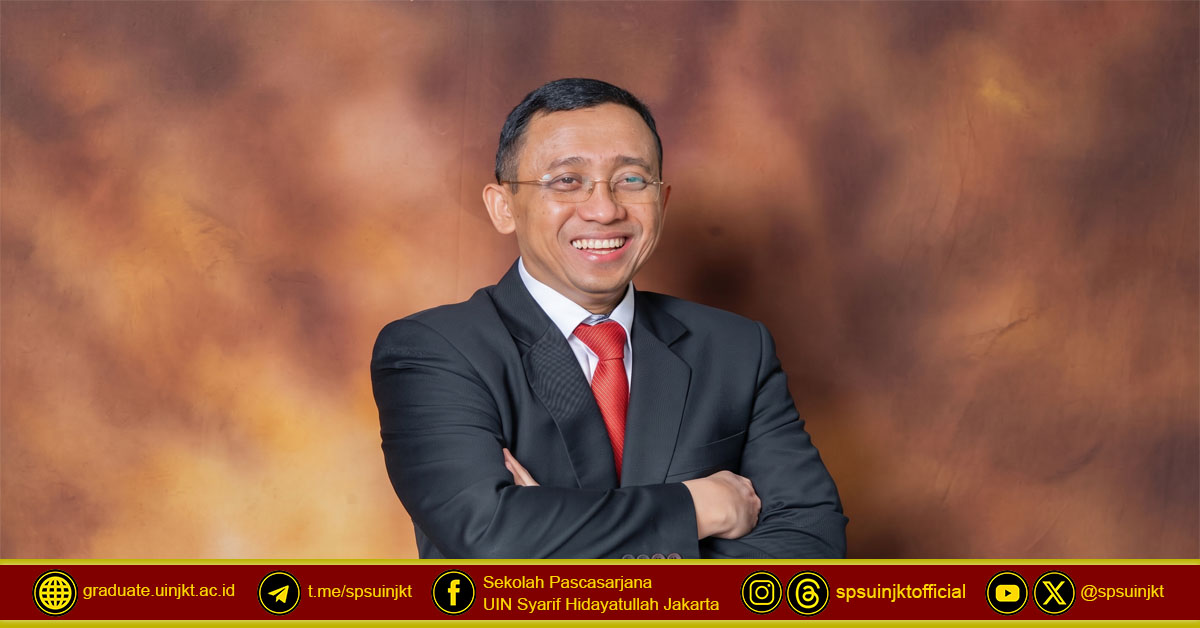
Jakarta, SPs NEWS - Professor of Islamic Education Thought at the Graduate School of UIN Syarif Hidayatullah Jakarta, Suwendi, emphasized the importance of Digital Scholarchy in strengthening the digital competence of lecturers of Islamic Religious Universities (PTKI). According to him, the digital competence of lecturers is not enough to be measured by the ability to use applications and technology, but also by the ability to integrate them critically, reflectively, pedagogically, and responsibly in academic practice.
This was conveyed by Suwendi when presenting the results of his research at The 72nd TEFLIN International Conference, which was held in conjunction with The 10th ICEMS (International Conference on Education in Muslim Societies) and The 2nd TESOL Research Colloquium, at UIN Syarif Hidayatullah Jakarta, October 7, 2026. The conference raised the theme "Transforming Language Education: Innovation, Inclusion, and Connection for a Sustainable Future."
The activity was opened by the Minister of Religion of the Republic of Indonesia and attended by the Rector and the Vice Rectors of UIN Syarif Hidayatullah Jakarta, the Dean of FITK, the English teaching community throughout Indonesia, as well as hundreds of panelists and education stakeholders.
In the research entitled Technology Acceptance Model: Perceptions, Usefulness, and Digital Skills of Lecturers in Islamic Higher Education Institutions, Suwendi examines the dynamics of digital technology acceptance within PTKI, especially the relationship between lecturer perceptions, technological benefits, and digital skills in the academic process. The research uses a mixed methods approach through online surveys and in-depth interviews with PTKI lecturers from various scientific and university backgrounds.
Suwendi explained that research shows that the perception of the convenience and usefulness of technology is significantly correlated with technology acceptance. However, the actual digital skills of lecturers are not always in line with the desire to adopt technology. Affective and normative factors also play a role in the process.
"Lecturers' awareness of the importance of technology has increased. However, this awareness has not always led to optimal use of technology in the Tridharma of Higher Education," said Suwendi.
According to him, one of the important problems found is the diversity of digital capabilities among lecturers. Some lecturers have known and used artificial intelligence (AI) devices, but their use has not been fully directed to strengthen the learning, research, and community service processes. This condition shows that the problem of digitization of PTKI is not only a problem of technology acceptance, but also concerns the quality of academic competence in using technology.
It is at this point, said Suwendi, that the concept of Digital Scholarchy becomes important. Digital Scholarchy places lecturers' digital capabilities within the framework of scientific tradition: technology is used not only because it is available or easy to use, but because it is able to strengthen the process of thinking, learning, knowledge production, and academic practice responsibly.
"Digital Scholarchy provides a perspective that lecturers are not enough to be users of technology. Lecturers need to be academics who are able to assess, criticize, integrate, and use technology responsibly in accordance with pedagogical needs and scientific values," he explained.
The findings of the study also show that the acceptance of technology at PTKI is influenced by the construction of Islamic scientific values and digital collegial support. Therefore, the professional development of lecturers needs to be directed not only at mastering devices, but also at strengthening critical thinking, ethics of using AI, academic integrity, and the ability to connect technology, pedagogy, and scientific substance.
Suwendi recommended the development of digital training for PTKI lecturers that is more structured and needs-based. Training needs to move from just tool-based training to strengthening Digital Scholarchy, including the development of a community of practice between lecturers, sharing good practices, and providing space and incentives for technology-based learning innovation. Thus, PTKI's digital transformation can develop into a responsible, adaptive, and scholarly academic ecosystem.
The research integrates three frameworks, namely the Technology Acceptance Model (TAM) 3, the Digital Competence Framework for Educators (DigCompEdu), and the Technological Pedagogical Content Knowledge (TPACK). The contribution of the research lies in the integration across these frameworks and efforts to read the acceptance of technology in the context of Islamic scientific values and collegial support within PTKI.
Suwendi said that this research still has limitations in geographical scope and the number of respondents and has not included AI literacy variables. The next research is expected to use longitudinal and digital ethnography approaches, involving student perspectives, and develop ethical guidelines for the use of AI that are more contextual for religious higher education. (SWD/JA)