
Guarding the Age with Faith, SPs Organizes a Book Review "Faith in the Midst of a Changing World"
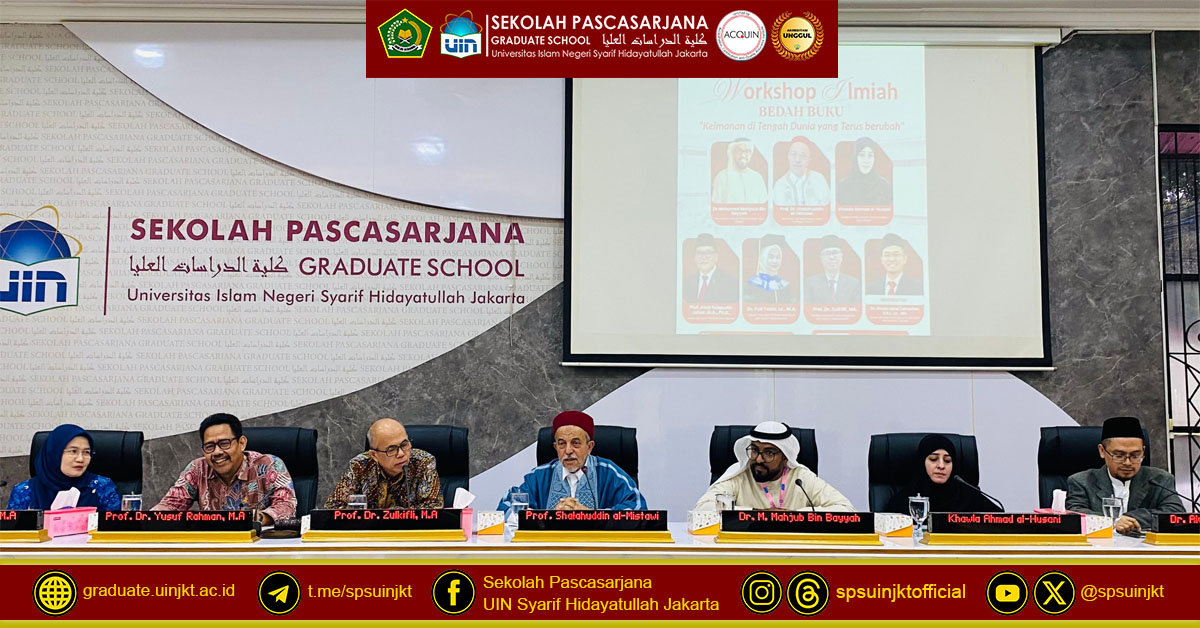
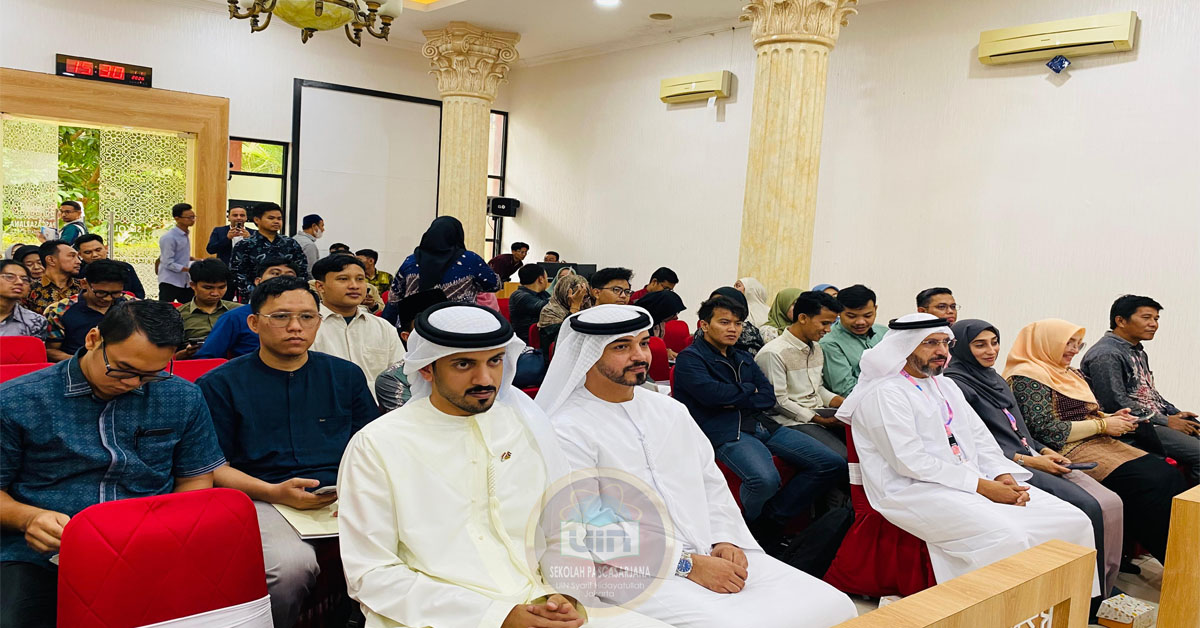
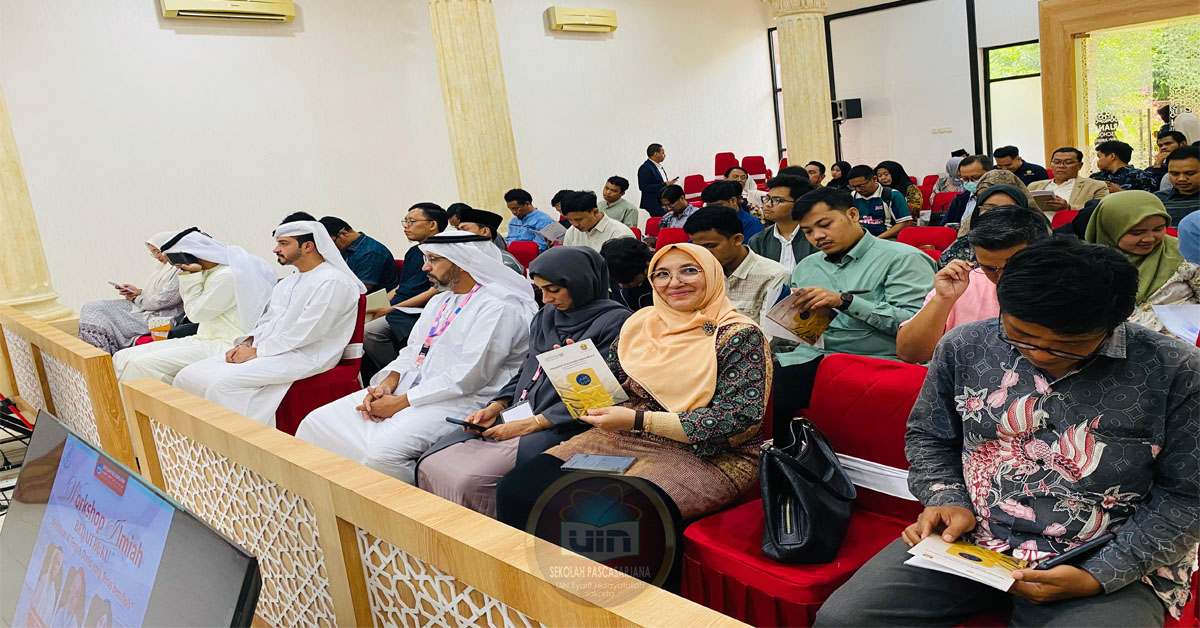
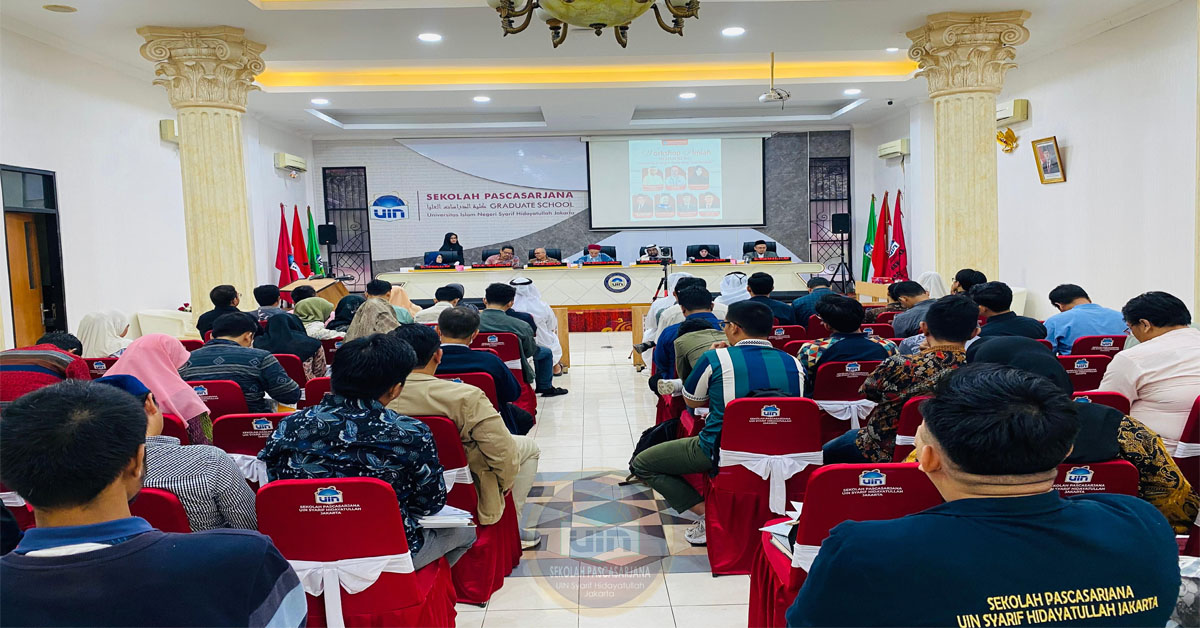
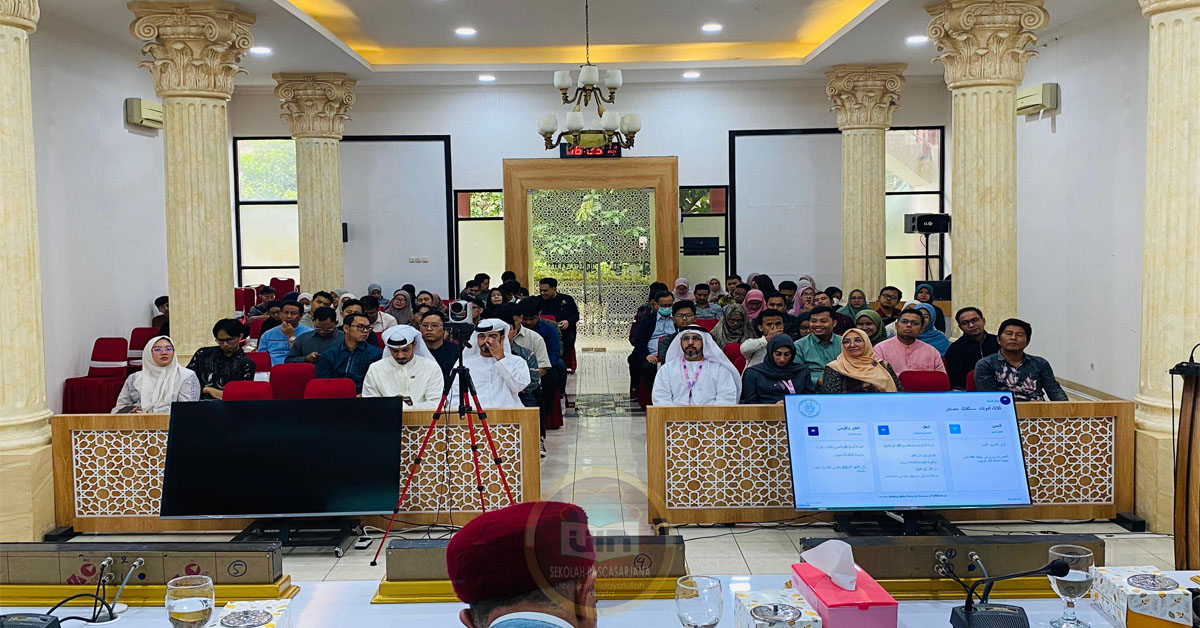
Auditorium of Prof. Dr. Suwito, MA SPs UIN Jakarta, SPs NEWS - The Graduate School (SPs) of UIN Syarif Hidayatullah Jakarta held a Scientific Workshop entitled book review "Faith in the Middle of a Changing World" by the world's leading scholar, Sheikh Abdullah Ben Bayyah. Located in the Auditorium of Prof. Dr. Suwito, MA, this agenda became a magnet for academics and students who want to explore the depth of spiritual thinking in the modern era.
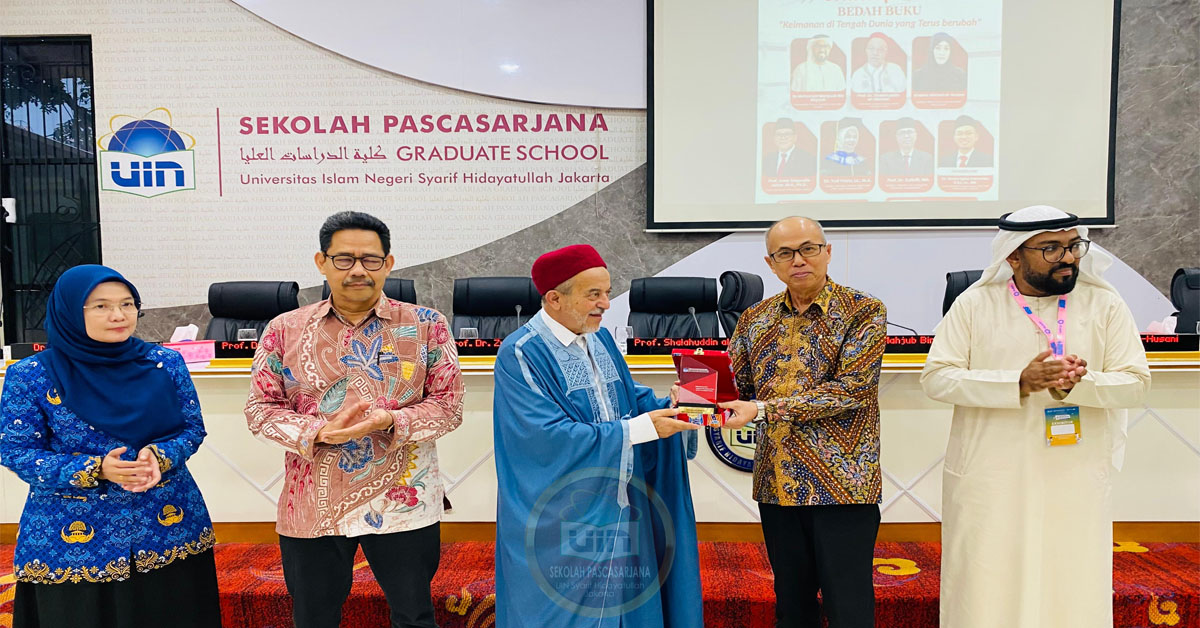
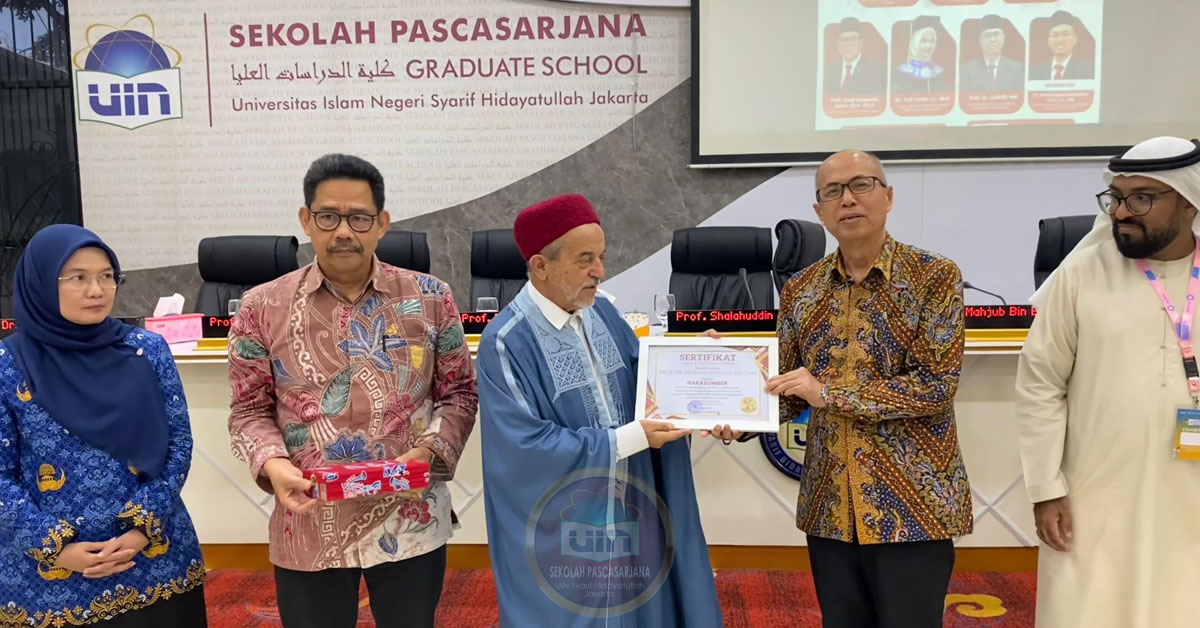
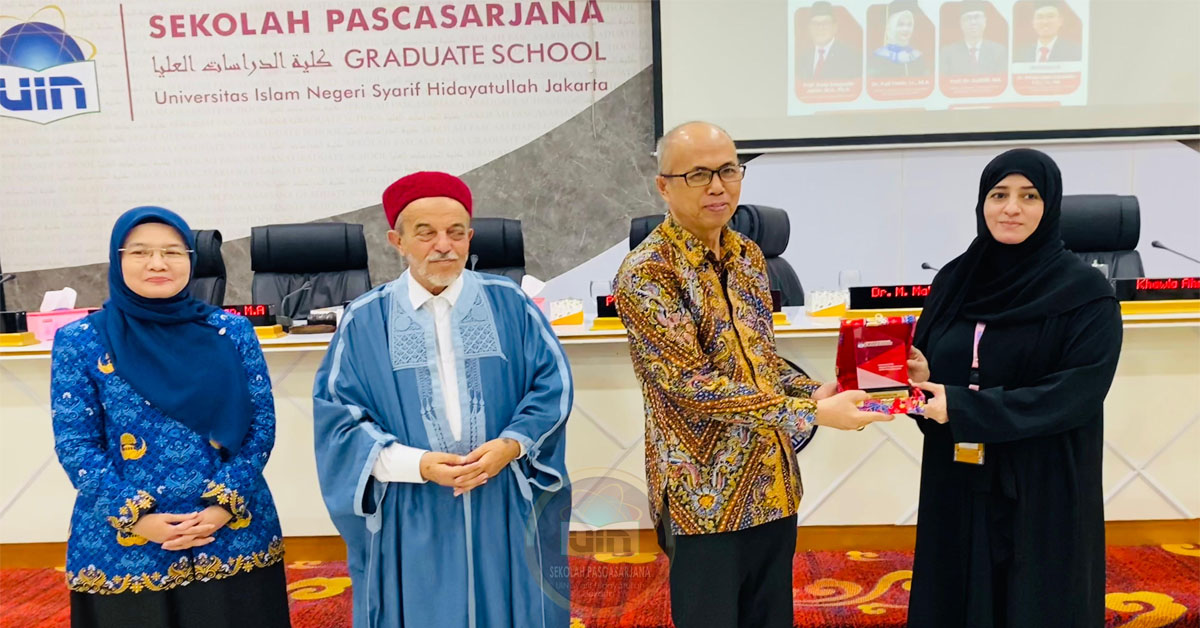
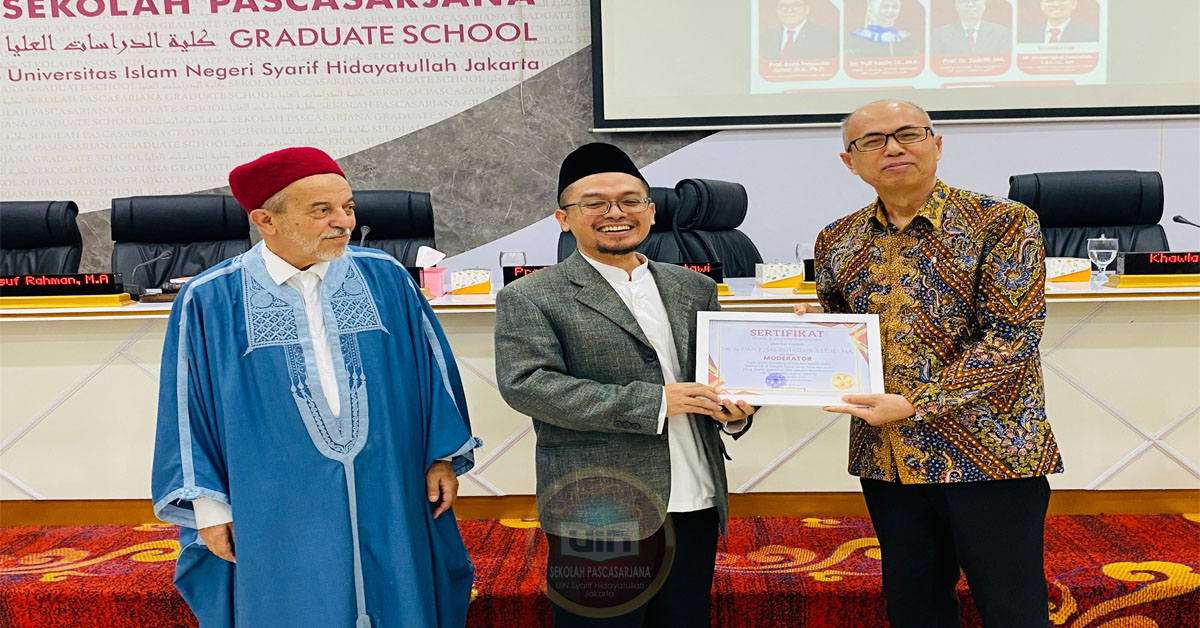
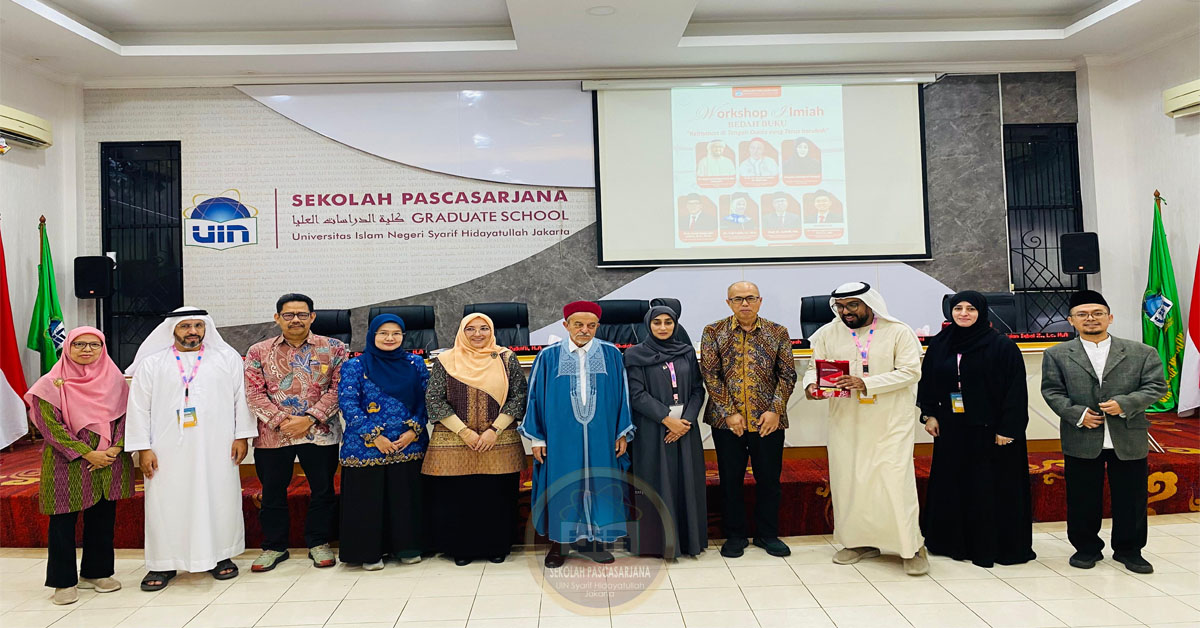
This global-scale discussion presented a series of speakers from within and outside the country. Present were Prof. Dr. M. Sholahuddin Al-Mustawi (Secretary General of the Supreme Scientific Council of Tunisia), Prof. Dr. Zulkifli, MA (Director of SPs UIN Jakarta), Dr. Muhammad Mahjub ben Bayyah (Advisor of Abu Dhabi Forum for Peace), Khawla Al-Husani (Research Director of Abu Dhabi Forum for Peace), and Dr. Yuli Yasin, MA (Dean of the Faculty of Dirasah Islamiyah UIN Jakarta). The discussion was interactive under the guidance of moderator Dr. Alvian Iqbal Zahasfan, MA.
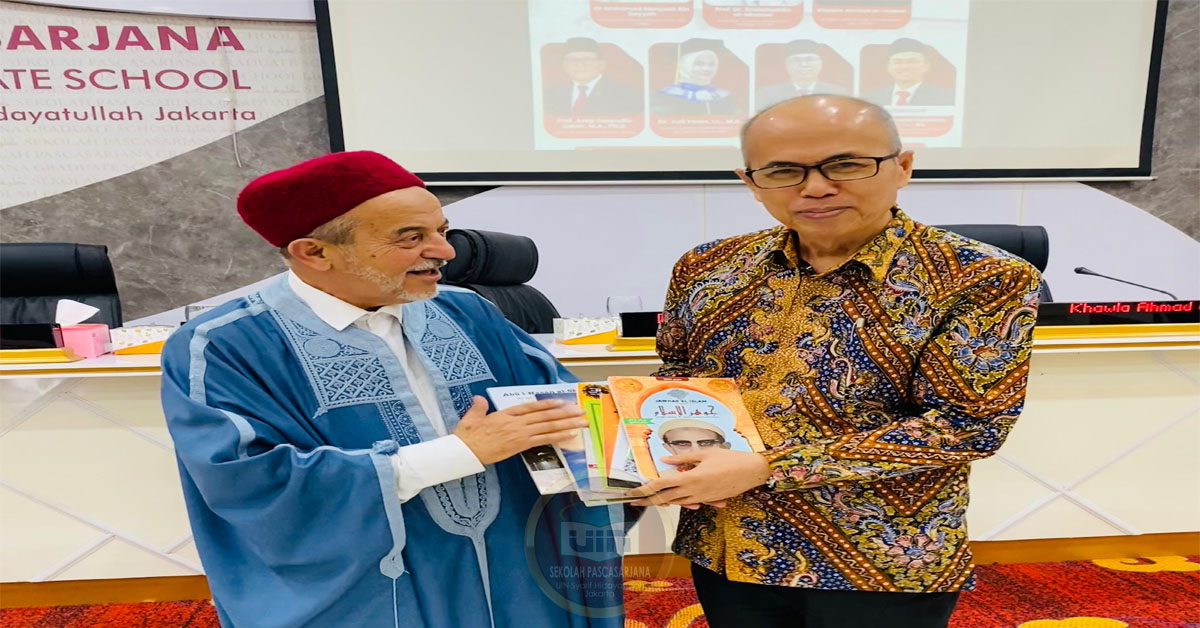
Starting the presentation session, Prof. Dr. M. Sholahuddin Al-Mustawi dissected the main idea of the book with a typical approach of Tunisian scholars. In particular, he related the values of faith carried by Shaykh Ben Bayyah with the epistemological lens of enlightenment in the style of Shaykh Ibn 'Assyria, which emphasizes the importance of contextual religious understanding but remains firmly rooted in the Islamic scientific tradition.
 |
 |
 |
 |
Furthermore, Prof. Dr. Zulkifli, MA emphasized that faith has a much wider spectrum than just dogmatism or individual beliefs. Faith, according to him, must be an epistemological foundation, a source of spiritual tranquility, a moral guide, and social energy that encourages peace and public benefit in the midst of the onslaught of modernization currents.
In Prof. Zulkifli's view, the important agenda of Sheikh Ben Bayyah's thought includes strengthening spirituality, guidance between revelation, reason, and science, as well as delivering friendly and dialogue-based da'wah. Other key points include resistance to nonviolent extremism, strengthening digital literacy, adaptive fiqh development, expanding peace education, and concern for environmental sustainability.
These universal ideas are considered very relevant for the Indonesian nation which lives in a pluralistic framework. The biggest challenge for a pluralistic society like Indonesia is how to translate these big ideas into concrete actions in the social, cultural, educational, and religious realms so that differences can be managed in a harmonious and constructive manner.
This is where the strategic value of the implementation of this book review lies. The academic activity is not only a place to admire the thoughts of a scholar, but also a trigger for the people to reflect: how faith remains relevant to guide the times, and how spiritual values can become an adhesive in the midst of the threat of social disintegration and fragmentation.
The answer to the challenges of the times is not to close ourselves off from change, but to embrace it through a solid foundation of faith, a deep mastery of knowledge, moral nobility, openness of dialogue, and moral responsibility towards humanity and the universe.
With this paradigm, faith in an era that continues to move fast will never be left behind by the times. On the contrary, a living and dynamic faith is present as a spiritual compass that gives direction and meaning to human civilization.
 |
 |
 |
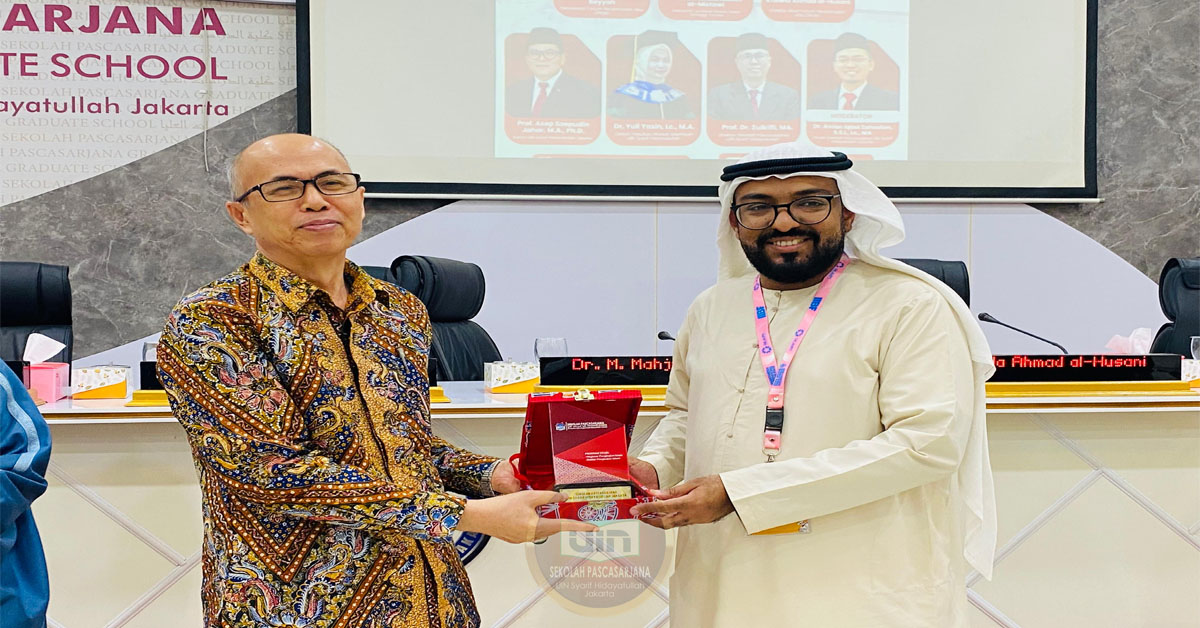 |
The atmosphere of the discussion was even warmer when Dr. Muhammad Mahjub ben Bayyah presented his material. The grandson of Sheikh Ben Bayyah expressed his deep appreciation for the warm welcome from the academic community of SPs UIN Syarif Hidayatullah Jakarta. He reiterated his grandfather's message that true faith must lead humans more than just verbal confession to deep knowledge.
Furthermore, Dr. Mahjub emphasized that true spirituality is a spirituality that leads humans to move from distance to dialogue, as well as turn differences into a bridge of cooperation in spreading common good. Faith must be able to become a collective energy that breaks down the barriers that divide people.
Meanwhile, Khawla Al-Husani invited participants to dive into the epistemological foundations of knowledge. He explained that before talking about faith, one needs to understand the tools to acquire knowledge. The tool is divided into three, namely Hiss (senses) to observe the material world, 'Aql (reason) for logical reasoning and conclusions, and Khabar and Wahyu as a source of information on metaphysical matters that are beyond the reach of the senses or intellect.
Khawla reminds that the three instruments of knowledge complement each other and are not competitors that negate each other. Epistemological errors often occur when one imposes a single instrument of knowledge to measure all kinds of reality. Although modern science excels in observation and experimentation, the limited range of senses is not necessarily evidence of the absence of spiritual reality.
 |
 |
 |
 |
Although the flow of digitalization and cross-cultural communication is developing rapidly, the change in human mindset has never eliminated the essential need for faith. In this case, faith does not need to be afraid of the advancement of science, just as reason is also required to be wise and not to exceed the limits of its authority.
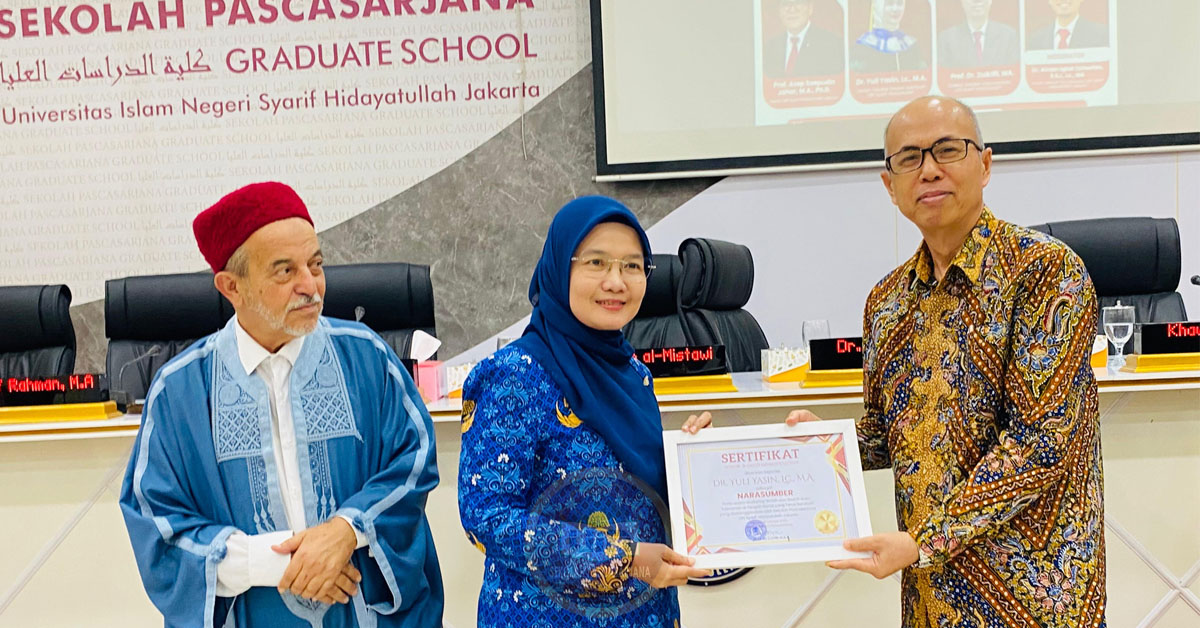
As the closing of the resource session, Dr. Yuli Yasin, MA explained his studies through the approach of fiqh, fiqh proposals, and maqashid asy-sharia. He emphasized from the beginning that the formulation is a form of his personal reading and analysis of Sheikh Ben Bayyah's work, not just direct text quotations.
Dr. Yuli underlined the main principle of "tsabat al-ushul wa murunat al-wasail", firmness in basic principles and flexibility in the means of application. By bringing together faith, renewal (tajdid), fiqh of change (fiqh al-taghyir), and the goal of sharia (maqashid asy-sharia), this thought becomes very elastic and applicative when drawn into the context of Indonesian dynamics.
Through the organization of this scientific workshop, SPs UIN Syarif Hidayatullah Jakarta hopes to open up the horizons of students and academics more broadly. A deep understanding of faith is expected to be a valuable provision in responding to the dynamics of the modern era that continues to change. (AIZ/JA)