
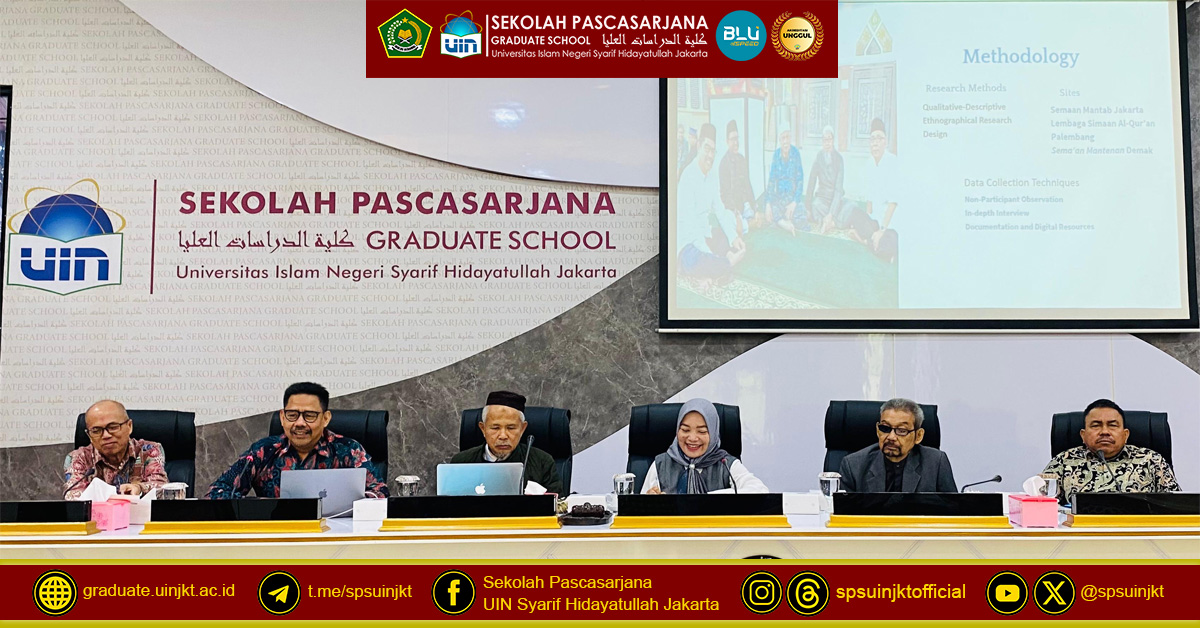
National Seminar on Lecturer Research Dissemination: Testing the Research Culture of SPs Lecturers
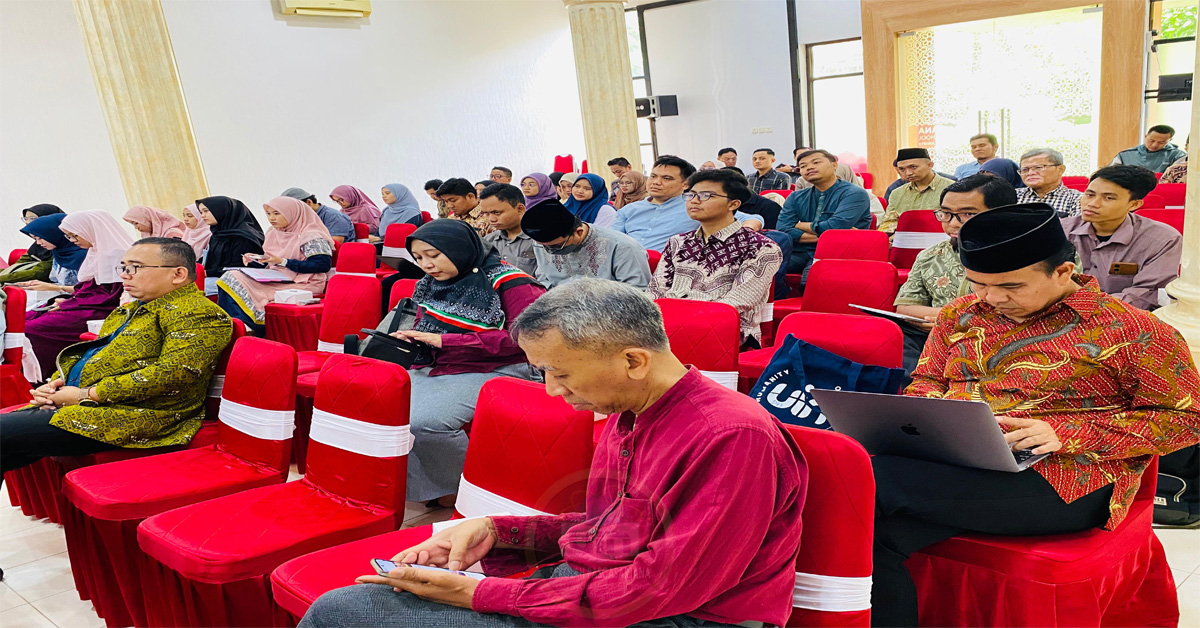
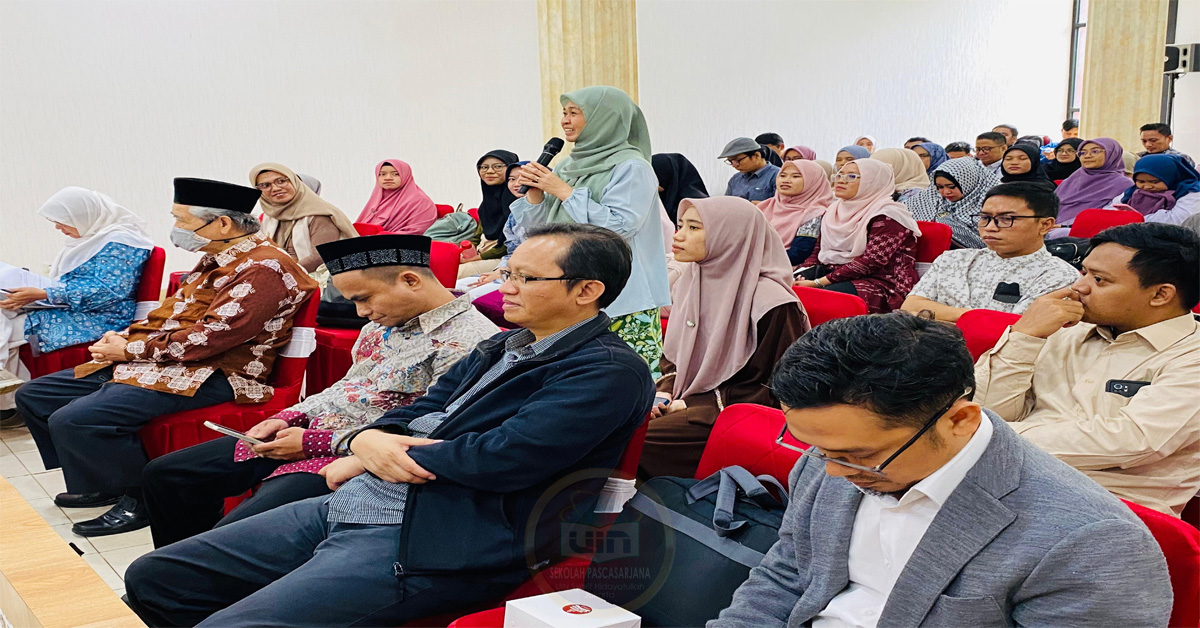
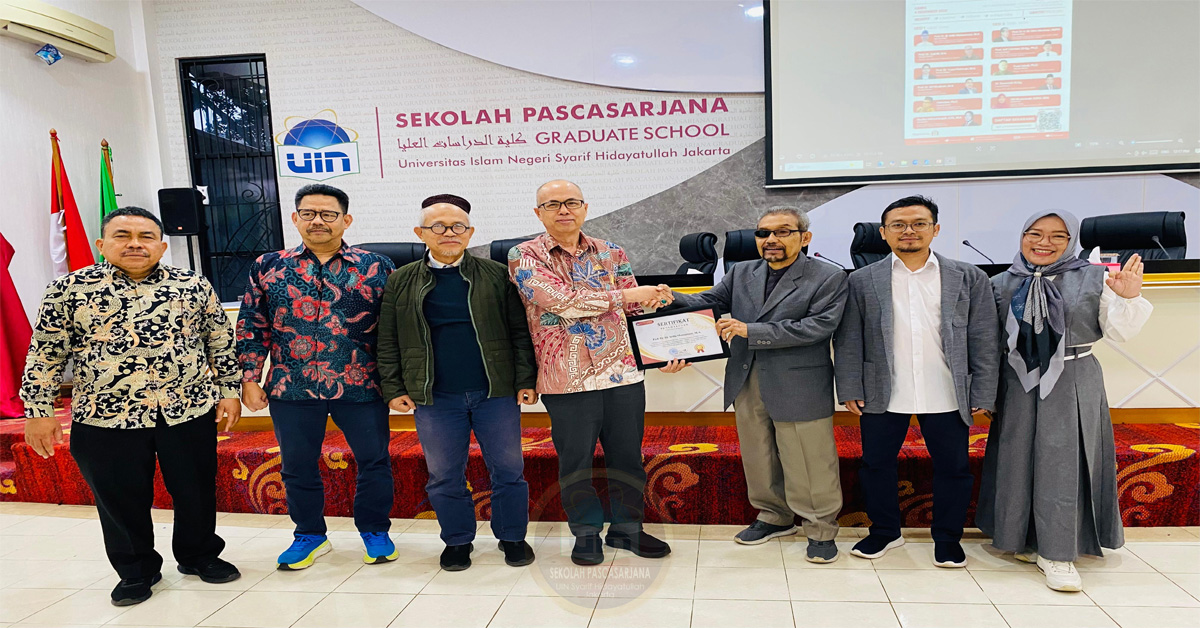
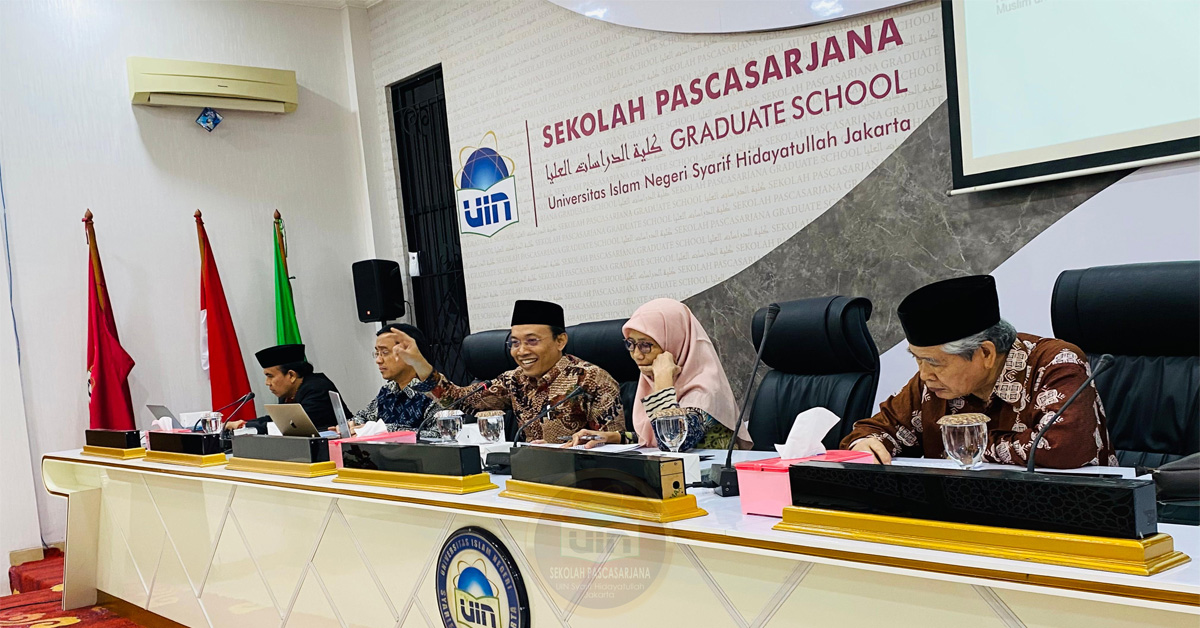
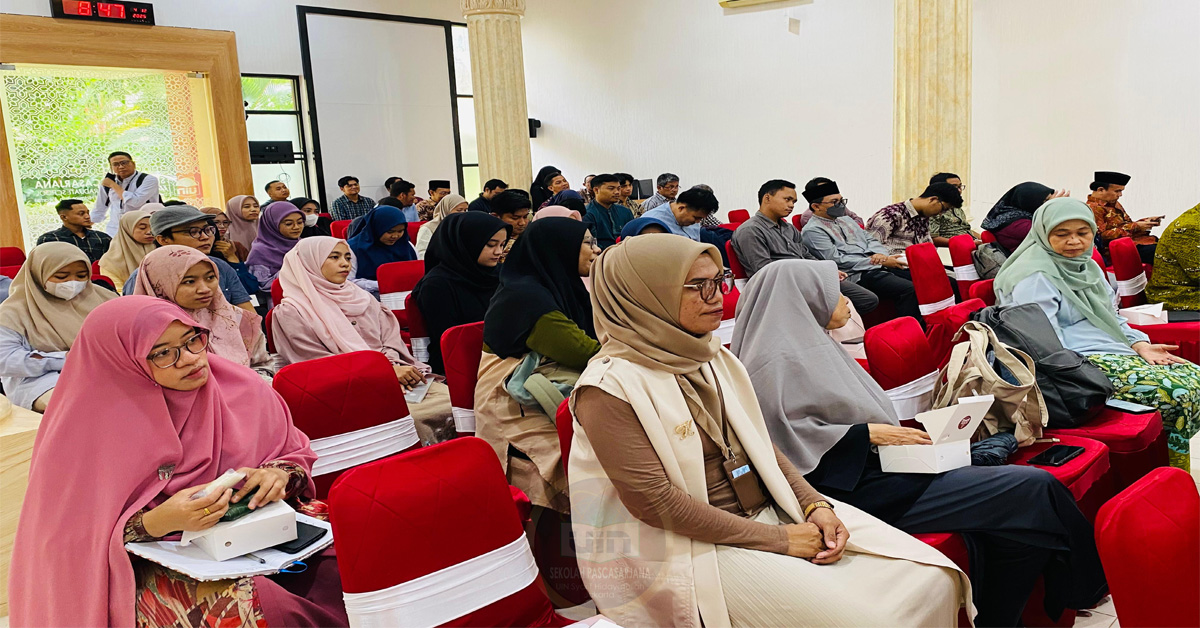
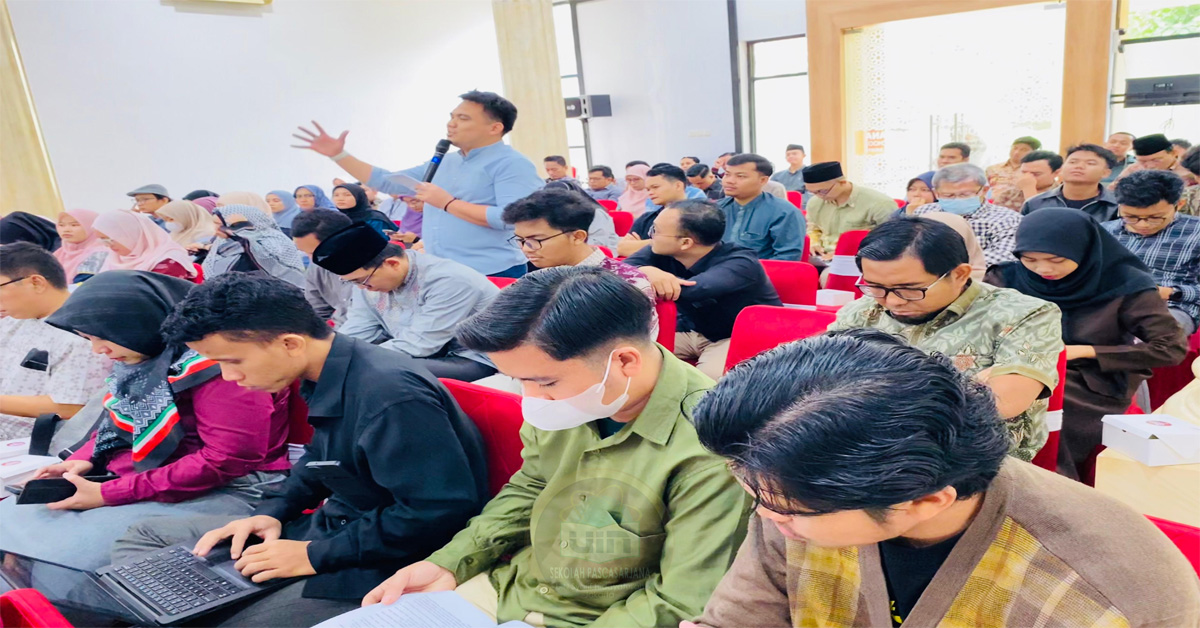
Auditorium of Prof. Dr. Suwito, MA SPs UIN Jakarta, SPs NEWS - The Graduate School (SPs) of UIN Syarif Hidayatullah Jakarta held a National Seminar "Research Dissemination of Lecturers of Graduate School of UIN Syarif Hidayatullah Jakarta 2025" at the Auditorium of Prof. Dr. Suwito, MA on Thursday, December 4, 2025 from 08.30-16.00 WIB. This event became an academic space to present the latest research results of SPs lecturers of UIN Jakarta.
This seminar is designed in two sessions, in the first session, taking place at 08.30–12.00 WIB, appearing as presenters in this session: Prof. Dr. Zulkifli, MA (Director of SPs), Prof. Dr. Yusuf Rahman, MA (Deputy Director of SPs), Prof. Dr. JM Muslimin, MA (Head of the SPs Doctoral Program), Fuad Jabali, Ph.D. (Lecturer of SPs), acting as a discussant Prof. Dr. Iik Arifin Mansurnoor, MA, Professor of Modern Islamic History and moderated by Rindha Widyaningsih, S.Fil, MA.g, a lecturer at UIN Saizu Purwokerto who is currently also studying in the SPs Doctoral Program
Meanwhile, the second session, which started at 13.00-16.00 WIB, presented the speakers: Prof. Arif Zamhari, M.Ag., Ph.D. (Professor of Sociology of Religion), Hamdani, M.Ag, Ph.D (Head of the SPs Master Program), Dr. Suwendi, M.Ag (SPs Lecturer), discussant Prof. Dr. M. Atho Mudzhar, MSPD, Professor of Sociology of Islamic Law, and guided by moderator Siti Muawaanah, S.Pd.I, MA BRIN researcher as well as a student of the SPs Doctoral Program.
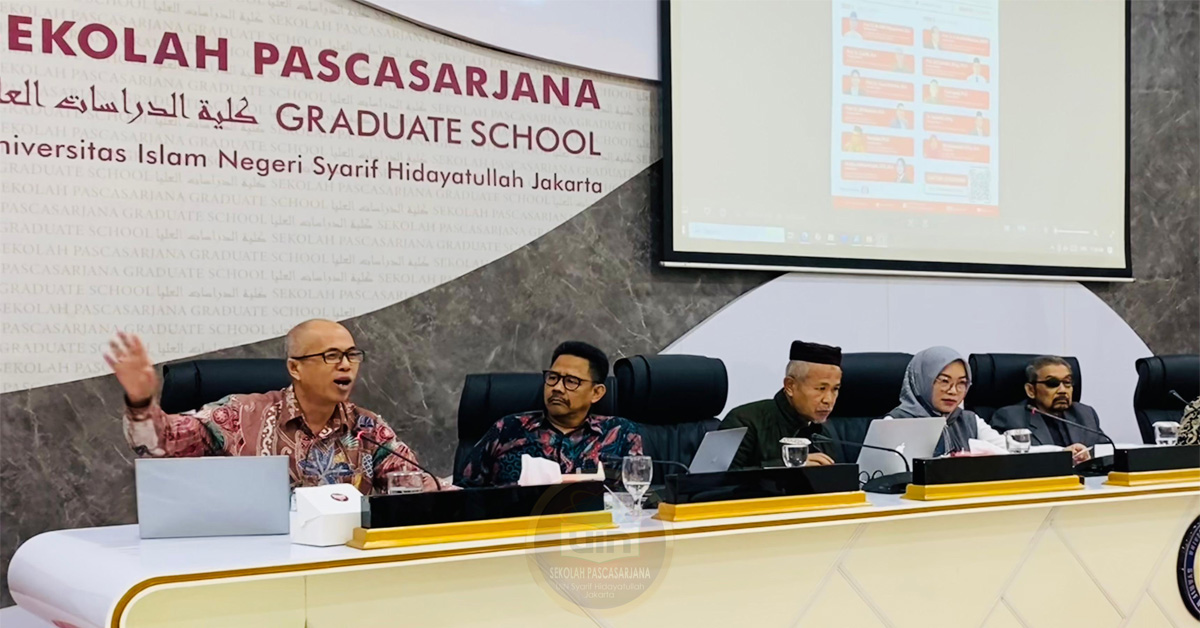
Director of SPs UIN Jakarta, Prof. Zulkifli, said that this dissemination activity is part of SPs' commitment to building a research culture. He emphasized that every lecturer is required to have a scientific publication of at least one article per year according to the SPs tagline, "one lecture, one Scopus, in one year."
"Lecturers can not only test, but also be tested by their students. We want to show that Graduate School lecturers also work and routinely conduct research," said Prof. Zulkifli.
The professor of sociology explained that some of the research presented was research that was still in process but had produced preliminary findings.
"Some have been entered into journals and are waiting for the publication process. In the future, this activity will be carried out regularly according to the research roadmap of each lecturer," he said.
Religious Literacy: Indonesian Students' Religious Insights at the Digital Intersection
Prof. Zulkifli explained his research on Religious Literacy among Indonesian Muslim students, a strategic population that is expected to be at the forefront of Islamic moderation in the country. This study succeeded in developing a valid and reliable measurement instrument, covering three crucial dimensions: Knowledge, Contextual and Critical Understanding, and Practice and Ethics.
The surprising findings show that although the foundations of basic religious knowledge of students are quite strong, the majority of Muslim students (the largest group) are in the category of moderate religious literacy. This indicates a serious gap; The ability to read religious texts literally may already be in place, but vital aspects such as critical thinking in interpreting teachings and adapting them to contemporary socio-cultural contexts still need to be significantly strengthened.
The results of this study provide a comprehensive data baseline, confirming the challenges in the digital age where the massive and often superficial dissemination of religious information is easily misleading. The eight-item instrument is now ready to be used to monitor the quality of religious understanding, not just the quantity of education. Increasing the number of students who reach the High category in religious literacy, especially in the dimension of critical understanding is key to preventing the spread of distorted understanding and to ensure that the younger generation can form a moderate, inclusive, and relevant face of Indonesian Islam in the future.
The Transformation of the Sema'an al-Qur'an Tradition in Indonesian Public Spaces
Prof. Dr. Yusuf Rahman, MA highlighted the Transformation of the Sema'an al-Qur'an Tradition, which has historically been firmly rooted in the pesantren environment, has now undergone a significant transformation into a vibrant religious practice in the Indonesian public space. Recent studies show a shift from the internal rituals of pesantren to a cultural-religious phenomenon that extends to mosques, households, community gatherings, and even digital platforms.
The implementation model is also diverse, from the 35-day format structured by MANTAB in Jakarta, flexible cultural expression by LSQ Palembang, to the integration in the marriage ritual (mantenan) in Demak, showing the adaptability of this tradition in strengthening the presence of the Qur'an in daily life.
This practice has succeeded in bridging social boundaries, encouraging cross-background interactions, and creating communities of faith both physically and virtually that sustainably sustain religious commitment in contemporary society. He said.
Sharia Literacy and Hospitality: Islamic Hospitality and Sundanese Culture Foundations of Halal Tourism
Prof. Dr. JM Muslimin, MA said that Indonesia has reaffirmed its position as the world's best halal tourist destination, and now, research reveals that the main secret lies in strong Social Capital, which is a combination of the value of Hospitality in Islam and local noble traditions, especially Sundanese culture.
This shows that the values of respecting guests, manners, and helping are firmly rooted in Islamic boarding schools, schools, and communities into solid social foundations. However, to optimize this potential, the value of hospitality, which has been channeled through hidden curriculum or habituation, needs to be systematically integrated into the formal curriculum. As a result, the development of this character will create tourism human resources that are not only competent, but also ethical and civilized, thereby strengthening Indonesia's position as a true Halal-Lifestyle mecca
The findings of this study confirm that the tradition of hospitality strengthened by the culture of pesantren has strategic potential to enrich character education and at the same time support the development of the national halal tourism sector. Although the practice of hospitality has been alive in daily life, as seen from the interaction of kyai-santri, the manners of receiving guests, and order in the pesantren environment, the next step is to arrange these values explicitly in the tourism curriculum and training.
Hydro-Solidarity: A Moral Solution to the Global Water Crisis
Islamic Hydro-Solidarity is proposed as a powerful new framework to address the global water scarcity crisis, bridging gaps in conventional water management approaches. This approach argues that the current solution to the water crisis is too caught up in a socio-political framework and fails to touch on the deep normativity and non-human dimensions of water availability.
By focusing on deep Islamic norms, this approach injects an often overlooked moral and spiritual dimension. It shifts from a narrow focus on mere human actors to a greater appreciation of nature. This approach revives 'Lieux de Memoire' (places of remembrance) such as Zamzam, making it a relevant starting point to address today's water challenges by re-instilling communal principles and spirituality in water resource management.
Motivation of Indonesian Muslim Students to Study in China
Another research was presented by Prof. Arif Zamhari, Professor of Islamic Anthropology, about the motivation and learning experience of Indonesian Muslim students in China. This research was inspired by the hadith "utlubul 'ilma even bi al-shin" about the importance of seeking knowledge to China.
According to Prof. Arif, the motivation of Indonesian students to study in China is influenced by various factors, ranging from scholarship opportunities, interest in learning Chinese language and culture, to the academic reputation of universities in the country.
"The university's high ranking, quality of teaching staff, and international facilities are the main attractions. In addition, the cost of living and eating is relatively cheap compared to Western countries," explained Prof. Arif.
He mentioned that the ease of the visa process, security, and job prospects are other driving factors. On the other hand, Western countries are considered less attractive due to the more difficult visa process, high costs, and security issues.
This study, said Prof. Arif, used the Push-Pull Factor model with in-depth interviews with 22 Indonesian Muslim students in China.
The following are the full findings that show why students choose China: (1) the availability of scholarships and further education opportunities, (2) the quality of the university, staff, and infrastructure, (3) more affordable tuition and living costs, (4) a simple visa process, (5) better business networks and job prospects, (6) China's personal security and strategic position, and (7) rapid economic and technological development
Interdisciplinary Transformation at UIN Jakarta and UIN Sunan Kalijaga
presented about UIN Syarif Hidayatullah Jakarta and UIN Sunan Kalijaga Yogyakarta, spearheading a significant paradigm shift in Islamic Studies, moving from a purely theological-normative approach to a richer and more complex interdisciplinary study framework.
Comparative analysis at the postgraduate level of these two campuses shows an aggressive policy in encouraging the integration of knowledge. UIN Jakarta carries the idea of Open and Dialogical Science Interaction, while UIN Sunan Kalijaga introduces the Spider Web approach to bind interdisciplinary and multidisciplinary sciences.
This transformation is not just a discourse; both institutions have successfully established this policy into real academic products, where theses, dissertations, and publications of graduate journals now consistently display daring research touching on Islam through the lens of the social-humanities and other disciplines.
The Effectiveness of the Directorate General of Islamic Guidance of the Ministry of Religion regarding Marriage Guidance
One of the research presenters, Dr. Suwendi, discussed the effectiveness of the Ministry of Religion's Directorate General of Islamic Guidance No. 172 of 2022 concerning Guidelines for the Implementation of Marriage Guidance (BINWIN) for brides-to-be.
According to him, the success of BINWIN is not only determined by regulations, but also by the paradigm and commitment of the organizers within the Ministry of Religion.
"Of the seven regions we researched, some ran BINWIN successfully and some did not. The key is the paradigm. BINWIN cannot only be a formality, but needs to be supported by social culture such as anti-divorce culture and public awareness about the importance of wedding preparation," said Suwendi.
He assessed that the BINWIN policy needs to involve community leaders and traditional leaders in a more proportional manner, because so far its implementation is still dominated by elements of ministries and institutions.
The research uses mixed methods through literature review, policy documentation, quantitative data collection of the Ministry of Religion and BPS, interviews with Ministry of Religion officials, and review of previous research results. This study lasted about five months.
This seminar succeeded in becoming an academic space that enriches contemporary Islamic discourse, from digital issues, traditions, tourism, to environmental crises.
This research dissemination activity is planned to become a routine agenda according to the research roadmap of each lecturer, strengthening the position of SPs UIN Jakarta as a leading interdisciplinary Islamic study center. (JA)