
SPs UIN Jakarta Lecturer: SPM Muallimin is Not a School Entity or Madrasah
Jakarta (Ministry of Religion) - Muallimin Muadalah Education Unit (SPM) is not a school or madrasah entity because it has different characteristics, academic traditions, and educational goals. Therefore, various quality assurance policies must still maintain the substance and distinctiveness of pesantren education.
This was conveyed by the Professor of SPs and at the same time the Head of the PAI Study Program of UIN Syarif Hidayatullah Jakarta, Suwendi, in a Discussion on the Pesantren Law held by the Islamic Boarding School Community Network (JMP) online, Thursday (6/8/2026).
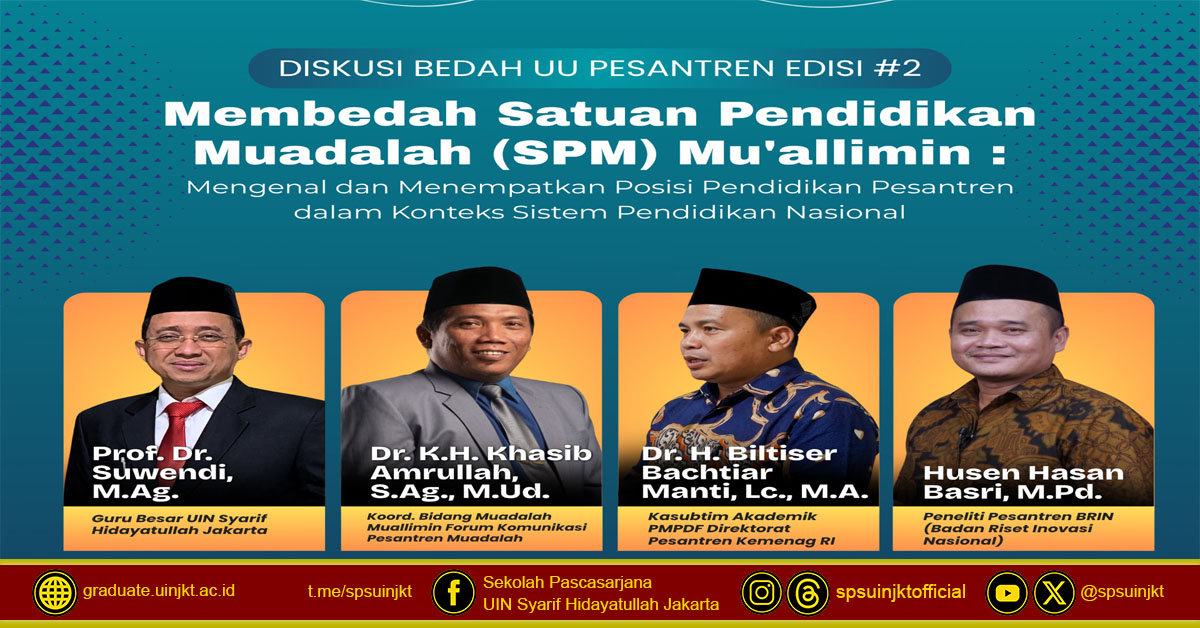
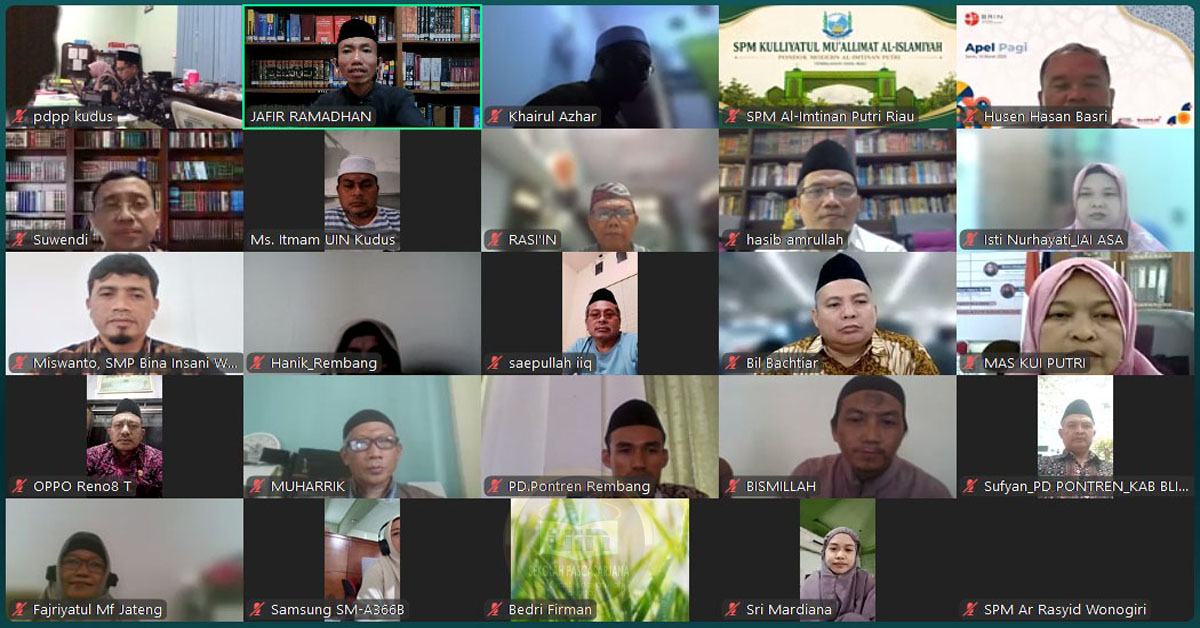
With the theme Dissecting the Mumalah Education Unit (SPM) Muallimin: Recognizing and Placing the Position of Islamic Boarding School Education in the Context of the National Education System, the activity was attended by hundreds of participants from elements of the Ministry of Religion, academics, pesantren managers, community organizations, and Islamic education observers.
The discussion presented Suwendi, the Coordinator of the Mumalah Muallimin Communication Forum of the Muadalah Islamic Boarding School Khasib Amrullah, the Head of the PMPDF Academic Subteam of the Directorate of Islamic Boarding Schools of the Ministry of Religion Biltiser Bachtiar Manti, and BRIN Islamic Boarding School Researcher Husen Hasan Basri.
According to Suwendi, Law Number 18 of 2019 concerning Islamic Boarding Schools is here to strengthen the recognition of Islamic boarding schools while maintaining the characteristics of Islamic boarding school education as an education system that has its own peculiarities.
"Pesantren is not a school and not a madrasah. Islamic boarding schools have different characteristics and academic traditions. Therefore, do not let the substance and characteristics of the pesantren be lost due to operational technical reasons, such as accreditation instruments and other policies," he said.
He explained that the Islamic Boarding School Law places the Masyayikh Assembly as a quality assurance instrument that is tasked with ensuring that the distinctiveness, tradition, and substance of pesantren education are maintained in various national education policies.
According to Suwendi, the presence of the Islamic Boarding School Law also strengthens the position of Islamic boarding schools through three important aspects, namely equal recognition, policy equality, and equal financing. Through these regulations, Islamic boarding schools receive stronger recognition, wider policy support, and financing attention that is increasingly equal to other educational units.
Suwendi also explained that the formal education pathway in the type of pesantren education consists of Formal Early Education (PDF), Muadalah Education Unit (SPM), and Ma'had Aly.
"SPM, PDF, and Ma'had Aly are held to produce mutafaqqih fiddin or religious members. Therefore, quality standards, graduate competencies, and educator assessment instruments need to be adjusted to the characteristics of pesantren education," he said.
Regarding mula education, Suwendi explained that pesantren regulations recognize two models of SPM implementation. First, SPM based on the Yellow Book or known as SPM Salafiyah. Second, SPM based on Dirasah Islamiah with a Muallimin Education Pattern known as SPM Muallimin.
According to him, Dirasah Islamiah and the Muallimin Education Pattern are one unit that cannot be separated.
"If SPM Muallimin is held, the pesantren must develop the study of Dirasah Islamiah as well as apply the entire muallimin education approach. The two are a unit that cannot be separated," he explained.
On the same occasion, Biltiser Bachtiar Manti explained that SPM Muallimin is a formal Islamic religious education based on Dirasah Islamiah with a Muallimin Education Pattern that is held in an integrated, holistic, and sustainable manner.
According to him, SPM Muallimin is supported by four pillars of quality standards, namely graduate competence, curriculum standards, standards for educators and education personnel, and institutional standards.
"These four pillars are the foundation in ensuring that the quality of Muallimin education is maintained without losing the typical character of the Islamic boarding school," he said.
Khasib Amrullah added that the diversity of academic traditions is one of the strengths of pesantren education. Therefore, the competence of SPM Muallimin and SPM Salafiyah graduates can have different characteristics according to the academic tradition of each pesantren.
"This diversity is the strength of Islamic boarding schools. Most importantly, all mula education units continue to move within the framework of national education goals and Islamic religious education goals," he said.
Meanwhile, Husen Hasan Basri assessed that the existence of SPM Muallimin has a strategic meaning for strengthening national education. In addition to maintaining the uniqueness of the Islamic boarding school, SPM Muallimin also opens wider access for Islamic boarding school graduates to continue their education and take part in various sectors.
"SPM Muallimin allows the birth of graduates who have a depth of religious knowledge as well as the ability to adapt to the times. This is where the strategic meaning of pesantren education is for the future of the nation," he said.
The speakers agreed that strengthening SPM Muallimin is an important part of the implementation of the Islamic Boarding School Law. By maintaining scientific traditions, Islamic boarding school character, and educational quality standards, SPM Muallimin is expected to continue to produce scholars, educators, leaders, and professionals who are firmly rooted in Islamic values and contribute to the progress of Indonesia.